
Last updated: October 31, 2026
Key Takeaways
- Start with a calm, practical check for a fixable reason in the next 10 minutes.
- Refusal to drink can be an early sign of stress in the body or brain.
- Use small offers, steady routines, and choices that protect dignity.
- Try changing the fluid first when the drink seems to be the problem, and escalate if swallowing looks unsafe.
If an older adult is refusing to drink, treat it as a medical and caregiving problem, not a stubbornness problem. In this guide to What to Do If an Older Adult Is Refusing to Drink, start by checking whether pain, confusion, nausea, a swallowing problem, or a change in taste is making drinking hard, then offer small amounts in a low-pressure way and contact the primary care doctor sooner rather than later if the refusal is new or getting worse. For general hydration basics, see the NIH’s MedlinePlus page on dehydration and the CDC’s older adult health resources.
What to do first when an older adult stops drinking
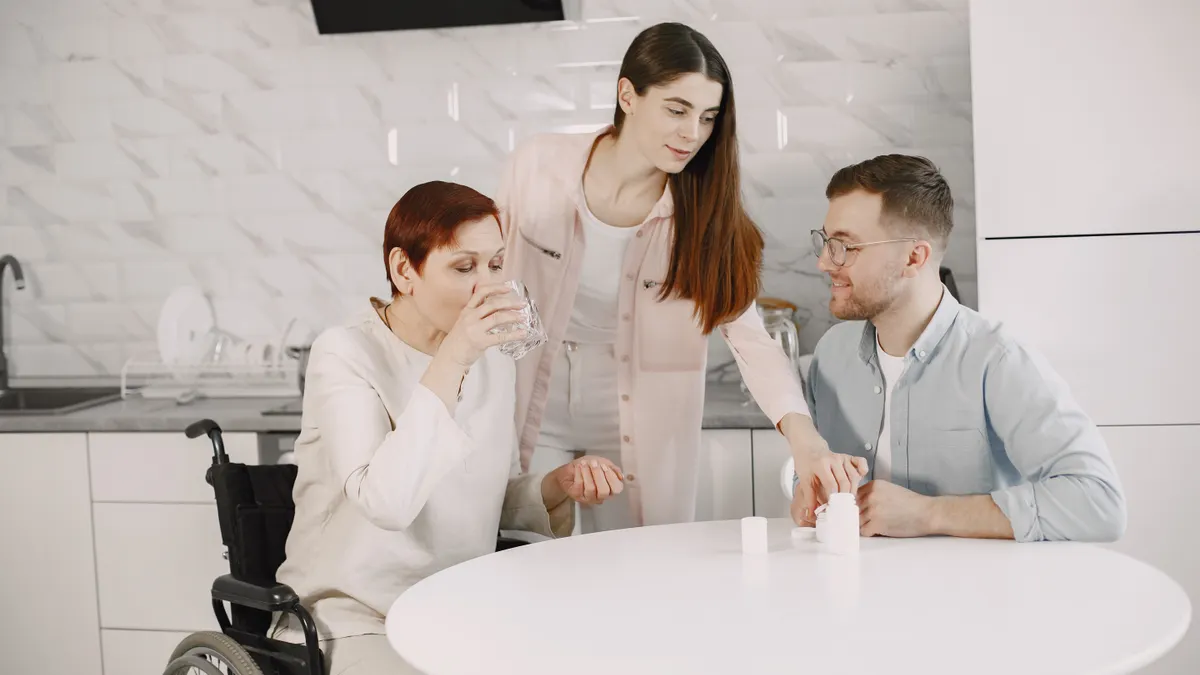
Therefore, start with a calm check for a reason you can act on in the next 10 minutes. A person who will not drink may be trying to avoid choking, may feel nauseated, may not like the taste of the water, or may be too confused to understand the glass in front of them. That is the difference between a habit issue and a safety issue.
Use this order:
-
Ask one simple question and watch the answer.
Say, “Does it hurt to swallow?” or “Does this water feel wrong?” If the person points to the throat, coughs, grimaces, or refuses after one sip, treat that as useful information, not defiance. If you are unsure whether the response suggests a swallowing problem, consult a clinician or speech-language pathologist. -
Look for a trigger that needs a clinician.
Check for fever, vomiting, diarrhea, mouth pain, a dry mouth with cracked lips, new confusion, slurred speech, or a recent change in medicines. If the older adult has dementia, the refusal may be tied to fear, forgetfulness, or trouble recognizing the cup. -
Change the offer, not the argument.
Put down a 4-ounce glass, a spoon, or a straw only if it helps the person drink more easily. Offer 1 or 2 sips at a time instead of a full cup. The goal is not to win a conversation; it is to get a safe amount in. -
Try a different temperature and flavor.
Cold water, warm tea, broth, diluted juice, or ice chips may work better than plain room-temperature water. A person who rejects one liquid may accept another within the same hour. -
Document what happened.
Write down what was offered, what was taken, and what made it worse. That record helps the primary care doctor or palliative care team see patterns instead of one bad moment.
This is not the time to force large glasses or insist on “just drink it.” Force can turn a manageable problem into ongoing refusal, especially in dementia or after a choking scare.
What illness, dementia, or mood changes can look like
Because refusal to drink can be the first sign that the body or brain is under stress, the problem is often not “won’t drink” but “cannot tolerate drinking the way before.” That matters because the fix depends on the cause.
A person with dementia may refuse drinks because the cup looks unfamiliar, the sequence of lifting and swallowing feels confusing, or they no longer recognize thirst the way they used to. One common mistake is offering a large glass and repeating the request every few minutes. That can increase agitation. A better move is a short phrase, the same cup each time, and a quiet setting with fewer distractions.
Mood changes matter too. Depression can flatten appetite and thirst at the same time. Grief, loneliness, and anxiety can make drinking feel pointless or even irritating. If the older adult is spending most of the day in bed, speaking less, or refusing meals as well as fluids, the problem is broader than hydration alone. That is a reason to bring in the primary care doctor, and sometimes palliative care, if the person has serious illness.
Pain and nausea also block drinking. However, mouth sores, ill-fitting dentures, thrush, reflux, constipation, and medicine side effects can make every sip unpleasant, and those issues are worth discussing with a clinician. A person with Parkinson’s disease, stroke history, or known swallowing problems may need a swallow evaluation rather than more encouragement. If sipping causes coughing, wet-sounding speech, or repeated throat clearing, stop pushing fluids and get medical advice. Choking risk is not a “keep trying” situation.
The useful question is not “Why won’t they cooperate?” It is “What makes drinking feel unsafe, painful, or confusing right now?” That shift changes the plan.
How do caregivers encourage drinking without pressure?
Because the goal is comfort and safety, use tiny offers, predictable routines, and choices that preserve dignity. The goal is to make each drink easier to accept in 1 to 2 minutes, not to negotiate a full daily target at the table.
Try this procedure:
-
Offer one small option at a time.
Give 2 to 4 ounces instead of a full glass. A small cup looks manageable and can lower refusal. -
Keep the wording simple.
Say, “Here are a few sips,” not “You need to drink this now.” Short language is easier for a tired or confused older adult to process. -
Make the setting quiet.
Turn off the television for 5 minutes, sit face-to-face, and remove competing smells or food. A calmer room often improves acceptance. -
Use the person’s preferred temperature or flavor.
Some people drink better when fluids are cold; others prefer warm liquids like tea or broth. If plain water is rejected, try a different drink that is still appropriate for the person’s medical needs. -
Use reminders that do not shame.
A clock, written note, or timed routine can help more than repeated verbal urging. For dementia, offering the same drink at the same point in the day can reduce resistance. -
Track what works over 24 hours.
Note the time, beverage, temperature, and amount. A pattern may emerge, such as better acceptance in the morning or after mouth care.
What does not help is the lecture. Telling a person, “You must drink or you’ll get dehydrated,” often creates resistance, especially if the person already feels ill or embarrassed. It can also backfire after a choking episode, because the person begins to associate drinking with pressure.
A practical limit helps here: if the person cannot safely take small sips after several attempts in a single day, the problem has moved beyond bedside coaxing. That is when a call to the clinician becomes part of the care plan, not a last resort.
Taste, temperature, and swallowing problems that change the fix
After you have ruled out an immediate crisis, changing the fluid first can help when the drink itself seems to be the problem, but stop and escalate when swallowing looks unsafe. Taste and temperature shifts are common in older age, and they can make plain water surprisingly unappealing.
A few specific adjustments are worth trying:
- Cold liquids can feel cleaner and easier to swallow for some people.
- Warm liquids may work better if the person has a sore mouth or prefers tea.
- Flavor changes such as a splash of juice or a broth may help when water tastes metallic or bland.
- Ice chips may be easier than a cup for someone with an aversion to drinking.
- A different container can matter, especially in dementia. A clear cup, a familiar mug, or a lidded cup may change acceptance.
If the person coughs on thin liquids, takes a long time to swallow, or seems to hold liquid in the mouth before swallowing, think swallowing problem, not preference. A swallowing problem can come from stroke, Parkinson’s disease, dementia, mouth pain, or general weakness. In that case, a speech-language pathologist or other swallowing specialist may need to evaluate the person. In the meantime, do not force large sips or offer drinks while the person is lying flat.
A common mistake is assuming “they drank water yesterday, so it must be fine today.” Swallowing ability can change day to day, especially during an infection or after a hospital stay. Another mistake is hiding medicine in a thick drink without checking whether that texture is safe for swallowing. If there is any history of aspiration, choking, or repeated coughing, ask the primary care doctor before changing textures on your own.
This is also where palliative care can help. In serious illness, the question is often not “How do I get them to drink as much as possible?” but “What fluids are comfortable and safe enough today?” That answer can change by the hour.
Red flags that mean this is probably illness, not preference
Consequently, treat sudden refusal to drink as a possible illness signal when it appears with fever, vomiting, diarrhea, worsening confusion, marked weakness, chest pain, or trouble breathing. Those symptoms suggest the refusal is part of something bigger and needs prompt medical attention.
Three patterns matter most:
-
New refusal after a change in medicine or illness.
Some medicines cause dry mouth, nausea, or dizziness. A recent infection can do the same. If the refusal started within a day or two of a medication change, the prescribing clinician should know. -
Refusal plus swallowing trouble.
Coughing with drinks, choking, wet voice, or “food going down the wrong way” can point to aspiration risk. That needs a clinician, not more pressure at the table. -
Refusal plus confusion or withdrawal.
If the person is sleeping much more, is hard to wake, or seems unusually disoriented, the problem may be acute illness. In a person with dementia, a sudden change from baseline is still a change.
Call the primary care doctor the same day if the refusal is new, persistent, or paired with any of the above. If the person cannot keep down fluids, has repeated vomiting, cannot swallow safely, or seems increasingly confused, urgent evaluation is warranted. If the person has a known serious illness and is already under palliative care, contact that team as well, because the plan may need to change quickly.
A refusal that lasts 24 hours is not automatically an emergency, but it is long enough to warrant action if the person is frail, medically complex, or already having trouble eating.
When to contact a clinician about refusing fluids
Meanwhile, contact a clinician quickly when the refusal lasts more than a day, starts suddenly, or comes with a swallowing problem, confusion, vomiting, fever, or a big change in behavior. Those are the points where home tactics stop being enough.
Use the call to give a crisp report:
- How long the refusal has lasted
- Whether the person is taking any sips at all
- What happens when fluids are offered
- Whether coughing, choking, or wet voice occurs
- Any fever, diarrhea, vomiting, new medicine, or new confusion
- Whether dementia, stroke history, Parkinson’s disease, or another swallowing risk is already known
That kind of report helps the clinician decide whether the next step is a medication review, a swallow evaluation, a same-day visit, or palliative care support. If the person is already under palliative care, say so upfront; the team may focus on comfort, mouth care, and the safest fluids rather than pushing volume.
Do not wait for a crisis just because “they usually do this.” A pattern can be normal for one person and dangerous for another. An older adult who is frail, has dementia, or has a known swallowing problem has less room to lose ground.
This page sits under the broader Senior Hydration and Medical Safety topic because refusal to drink is often a warning sign, not a standalone habit problem. The right response is to look for the cause, reduce pressure, and escalate when the body is asking for help.
What to avoid when an older adult refuses to drink
Overall, do not turn the situation into a contest. The wrong approach can cost trust, safety, and the chance to learn what is actually wrong.
Three mistakes cause the most trouble:
-
Arguing or threatening.
It may get a sip in the moment, but it often increases resistance later. In dementia, it can trigger fear and agitation. -
Forcing large volumes.
This raises choking risk and can make nausea worse. It also ignores the possibility of a swallowing problem. -
Assuming plain water is the only option.
That can miss easy fixes like temperature changes, flavor changes, broth, or a smaller cup.
The better rule is simple: if a change improves comfort and safety, keep it; if it increases coughing, distress, or refusal, stop and regroup. The cost of a wrong move here is not just less fluid. It can be aspiration, a fall from dizziness, or a delay in treating an illness that needs attention.
Why do older adults refuse water?
Older adults refuse water for reasons that are usually physical, cognitive, or emotional, not simply stubbornness. Taste changes, dry mouth, nausea, pain, dementia, depression, or a swallowing problem can all make drinking feel unpleasant or unsafe. A new refusal should be treated as a clue, especially if it appears with cough, fever, confusion, or weakness.
How do caregivers encourage drinking without pressure?
Caregivers encourage drinking best by offering small amounts, using a calm setting, and matching the drink to the person’s preference for temperature or flavor. A 2- to 4-ounce offer is often easier than a full glass. Short, neutral language works better than repeated reminders or arguments, especially with dementia.
When is refusing fluids an emergency in seniors?
Refusing fluids becomes urgent when it comes with choking, wet voice, repeated coughing, severe confusion, vomiting, fever, trouble breathing, or a sudden decline from baseline. A person who cannot safely swallow or cannot keep fluids down needs prompt medical help. If the refusal is new and persistent, contact the primary care doctor the same day.
Drafted with AI; not yet reviewed by a person.

Leave a Reply