
Last updated: November 05, 2026
Key Takeaways
- A good fluid offering schedule uses 4 to 6 small chances to drink, not one big push.
- Morning fluids work best right after waking and again with breakfast.
- Meal times are strong chances for fluids, but the drink should not distract the person from eating.
- Between meals can be a useful time to offer fluids because the person is less busy and less focused on food.
The best times to offer fluids to an older adult with dementia are after waking, with and between meals, and earlier in the evening, when the person is often more settled and more willing to accept a drink. For this topic, The Best Times to Offer Fluids to an Older Adult With Dementia is usually about routine, not thirst, because dementia can weaken the cue to drink and make timing more important than volume. A simple fluid offering schedule works better than waiting for thirst; see the NHS guidance on staying hydrated and the Alzheimer’s Society advice on eating and drinking for people with dementia. NHS Alzheimer’s Society
The fluid offering schedule that works best day to day

A good fluid offering schedule is built around 4 to 6 small chances to drink, not one big push. The goal is to attach fluids to moments that already happen every day, because routine is easier to recognize than a request that arrives out of nowhere.
For many caregivers, the most useful anchors are waking, breakfast, mid-morning, lunch, mid-afternoon, and dinner. That gives the person 5 or 6 contact points without turning hydration into a constant project. Each offering can be small: a half-cup, a few sips, or a preferred 4-ounce glass. The exact amount matters less than the repeated chance to drink.
The schedule should fit the person’s actual day. If the person rises late, shift the morning drink later. If they nap after lunch, move the next offering to 30 to 60 minutes after waking. A rigid clock time can fail when dementia changes pace, but the same sequence often still works.
This is not the same as forcing drinks every hour. Too many interruptions can increase resistance, especially in people who become agitated when routines feel intrusive. It can also create more bathroom trips than the person can handle comfortably. A lighter schedule with reliable repetition is usually more sustainable.
If the care plan already includes dementia routines, this fluid schedule belongs beside them, not apart from them. It works well as part of broader senior hydration routines, because the drink offer is tied to meals, grooming, medications, and rest instead of treated as a separate task. If hydration is being managed alongside swallowing, continence, or medication changes, consult a clinician or speech-language pathologist as needed. The Alzheimer’s Association and NHS both stress routine support for daily care. Alzheimer’s Association NHS
When morning fluids are most likely to help
Morning fluids are most useful right after waking and again with breakfast. After a night without drinking, many older adults start the day mildly behind on fluids, and morning is when the body is easiest to reset.
Offer the first drink within the first 15 to 30 minutes after waking if possible. A glass of water, milk, juice, or another approved beverage can be placed beside medication or breakfast preparation so the offer feels like part of the routine. If the person eats in bed, on the couch, or at a dining table, the drink should appear in that same place. Context matters as much as the cup.
Breakfast is a built-in second chance. Many people with dementia accept fluids more readily when food is present, especially if they are already seated and the cup is already in reach. Warm drinks can help in cool weather; cold drinks may be better if the person prefers them or if a dry mouth is part of the problem.
A morning pattern also gives the caregiver time to observe what happened overnight. If the person seems unusually sleepy, has dark urine, or needs repeated prompting to swallow, the morning drink can become a small checkpoint for hydration problems. It is not a diagnosis tool, but it does show whether the day is starting poorly.
One limitation: some people with dementia do not want much to drink first thing. In that case, do not treat morning as the only important window. Use it as one of several openings, and try again at the next routine event rather than arguing over the first cup.
How to use meal times without making drinks compete with food
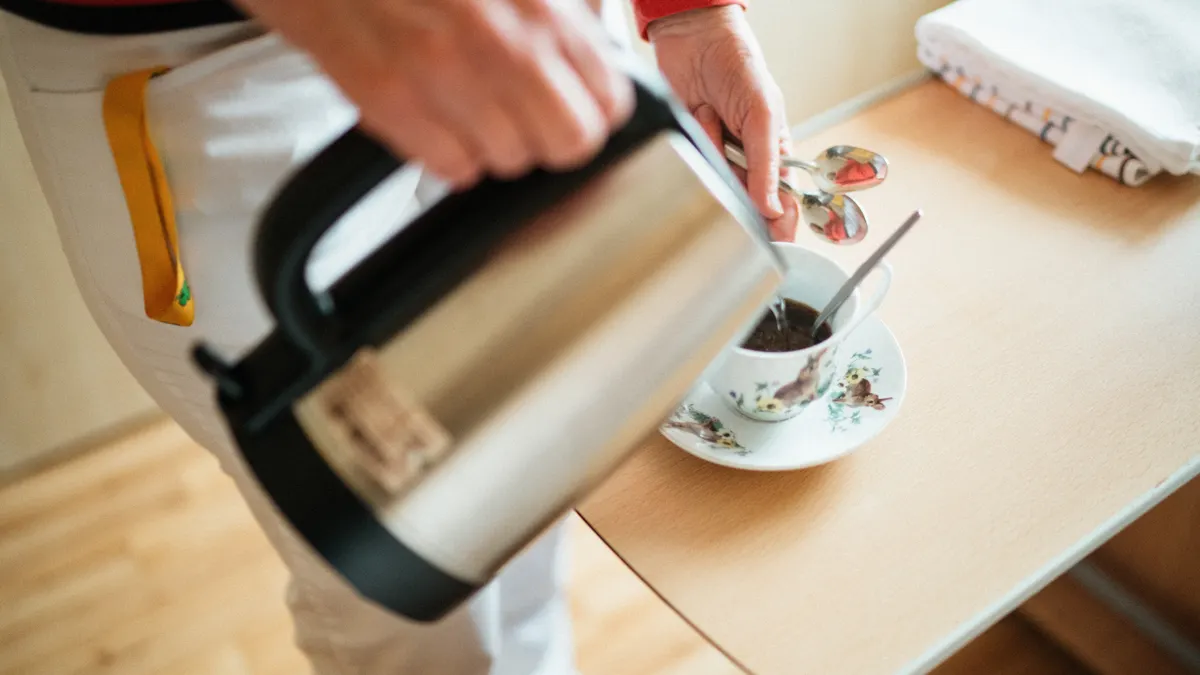
Meal times are one of the strongest opportunities for fluids, but the drink should not distract the person from eating. Offer fluids at the same meal seat, with the same plate setting, so the drink feels ordinary rather than like a separate demand.
The cleanest pattern is to place a drink on the table before the first bite, then refresh it once during the meal if needed. Some caregivers do better with a few sips before the food arrives and more after the first few bites. The order depends on appetite, swallowing comfort, and whether the person gets full too quickly from liquid.
A meal-time drink works best when it is easy to see and easy to hold. A clear cup, a handled mug, or a lidded cup can help, especially if the person has tremor or poor grip. Keep the container size modest. A huge glass can look like a task; a 6- to 8-ounce cup looks like a normal part of the place setting.
Meal time is not the moment for pressure. If the person is focused on eating, repeated reminders to drink can break the rhythm and lead to refusal of both food and fluids. The better move is to leave the cup where it can be reached and offer a short cue such as, “Here’s your drink,” rather than a long explanation.
This is also the time to watch for swallowing problems. Coughing, throat clearing, wet voice, or holding liquid in the mouth are signs the texture or pace may need review with a speech-language pathologist or other clinician. That risk matters more than the clock.
Between meals: the quiet windows that prevent the day from running dry
Between meals can be an effective time to offer fluids because the person is less busy and less focused on food. A mid-morning and mid-afternoon offer usually catches two of the day’s most useful hydration windows without crowding the table.
The mid-morning window, often 1 to 2 hours after breakfast, is a good reset. The person has usually settled after washing, dressing, and eating, but is not yet tired from the afternoon. A small drink at this point can be easier to accept than a larger one at lunch. The same is true after lunch, especially if the person takes a nap and wakes up dry-mouthed.
Between-meal offerings work best when they are brief and predictable. Place the drink in front of the person, name it once, and give 1 to 2 minutes for a response. If the person reaches for it, keep the pace slow. If the person ignores it, come back later rather than turning the moment into a negotiation.
This is where a lot of generic advice falls short. Telling caregivers to “encourage more fluids” is vague enough to be useless. A real schedule says: after breakfast, mid-morning, mid-afternoon, and with dinner. That pattern usually gives enough chances without making the day feel like a series of water breaks.
Between meals is not the right time for everyone. If the person becomes restless when approached too often, or if bathroom trips are already a problem, fewer but more reliable offers may work better. A caregiver can test one extra between-meal chance for a few days, then keep it only if the person accepts it without distress.
Why evening fluids should be earlier, not later
Evening fluids are usually best offered with dinner and then tapered off 1 to 2 hours before bedtime. Late-night drinks can improve hydration on paper but worsen sleep, increase nighttime toileting, and create fall risk when the person gets up in the dark.
Dinner is the last good anchor for many older adults with dementia. A drink at that meal often gets accepted because the person is already seated and the routine is familiar. If the person is prone to dry mouth, a small sip after dinner can still be useful. The key is to avoid making the final drink of the day too large or too late.
For most caregivers, the safest pattern is to shift fluids earlier in the evening rather than cutting them off abruptly. That can mean offering a larger share at supper, then only small sips afterward if needed for medication or comfort. A bedside drink may still make sense, but it should be small and within reach, not a full glass that invites multiple bathroom trips.
This timing trade-off is one of the hardest parts of dementia care. Better hydration and better sleep do not always happen at the same time. If the person wakes several times overnight, the caregiver may need to reduce late fluids rather than keep pushing them. That choice is often sensible, but it should be made knowingly, not by accident.
Who this is not for: an older adult who already wakes frequently to urinate, has a high fall risk, or becomes confused in the bathroom at night may need a stronger evening cutback than a person who sleeps through the night.
A simple routine that turns timing into action
The easiest way to use timing is to pair fluids with the same 5 daily events every day. Start with waking, breakfast, mid-morning, lunch or early afternoon, dinner, and an early-evening top-up if needed. Keep the pattern steady for a full week before changing it.
- Put a drink in the person’s usual morning spot within 15 to 30 minutes of waking. The result should be an immediate, low-pressure first offer.
- Set a second drink at breakfast, even if the first one was only partly accepted. The result should be one more chance while the person is seated and engaged.
- Offer a small drink 1 to 2 hours after breakfast. The result should be a quiet mid-morning hydration window that does not compete with meals.
- Repeat the same idea after lunch or in mid-afternoon. The result should be a reset before the late-day slump.
- Serve fluids with dinner, then taper after that. The result should be hydration without as much nighttime disruption.
- Review what worked after 3 to 7 days. The result should be a schedule shaped to the person’s acceptance, bathroom pattern, and sleep.
This routine is useful because it is boring in the right way. It does not rely on memory, moods, or guessing when thirst will show up. It relies on the same cues every day. In dementia care, that repetition is often what makes the difference.
A useful rule: if a time slot is repeatedly refused, move the offer to a different routine moment instead of keeping the slot unchanged for weeks. The schedule should serve the person, not the calendar.
What usually goes wrong with timing, and how to fix it
The most common mistake is waiting until the person looks thirsty. By then, the body may already be behind, and dementia can make thirst hard to notice or describe. The fix is to offer at routine points, not only when the person asks.
Another mistake is offering too much at once. A full large glass can feel like a chore, especially for someone with poor appetite, swallowing concerns, or hand weakness. A smaller cup offered more often is usually easier to accept and easier to finish.
A third mistake is putting fluids too late in the day. That often costs the person sleep and can increase nighttime falls. Move the main evening drink earlier, and use tiny sips rather than a full serving if bedtime is near.
There is also the opposite error: offering drinks so often that the person feels managed instead of helped. If every 20 minutes becomes a prompt, resistance rises. Keep the schedule anchored to a few reliable moments and leave some breathing room between offers.
If the person suddenly drinks much less than usual for a day or two, or seems confused in a new way, that is not a timing problem alone. It may need professional attention, especially if there is fever, vomiting, diarrhea, or a change in alertness. Timing helps, but it does not replace medical judgment.
For more on broader planning, the hub on senior hydration routines can sit beside this guide without repeating it. See also the NHS dementia overview and the CDC page on older adult hydration for general support. NHS CDC
Should fluids be offered before meals or after?
Both can work, but before meals is often the better first choice. A small drink before a meal can wake the mouth and make the cup part of the routine, while a drink after the meal can serve as a second chance if the first one was ignored. If the person fills up quickly, keep the pre-meal amount small.
How do I reduce nighttime bathroom trips?
Move most fluids earlier and make dinner the last full drink of the day. A small sip with medication may still be needed, but avoid large glasses within 1 to 2 hours of bedtime. If nighttime urination stays frequent, ask a clinician to review medications, bladder issues, and fall risk.
What if the person refuses at certain times?
Change the time, not just the wording. If a morning offer is refused for several days, try the same drink mid-morning or with breakfast instead of repeating the same failed moment. Some people accept fluids better when they are seated, less rushed, or already handling food.
Drafted with AI; not yet reviewed by a person.

Leave a Reply